
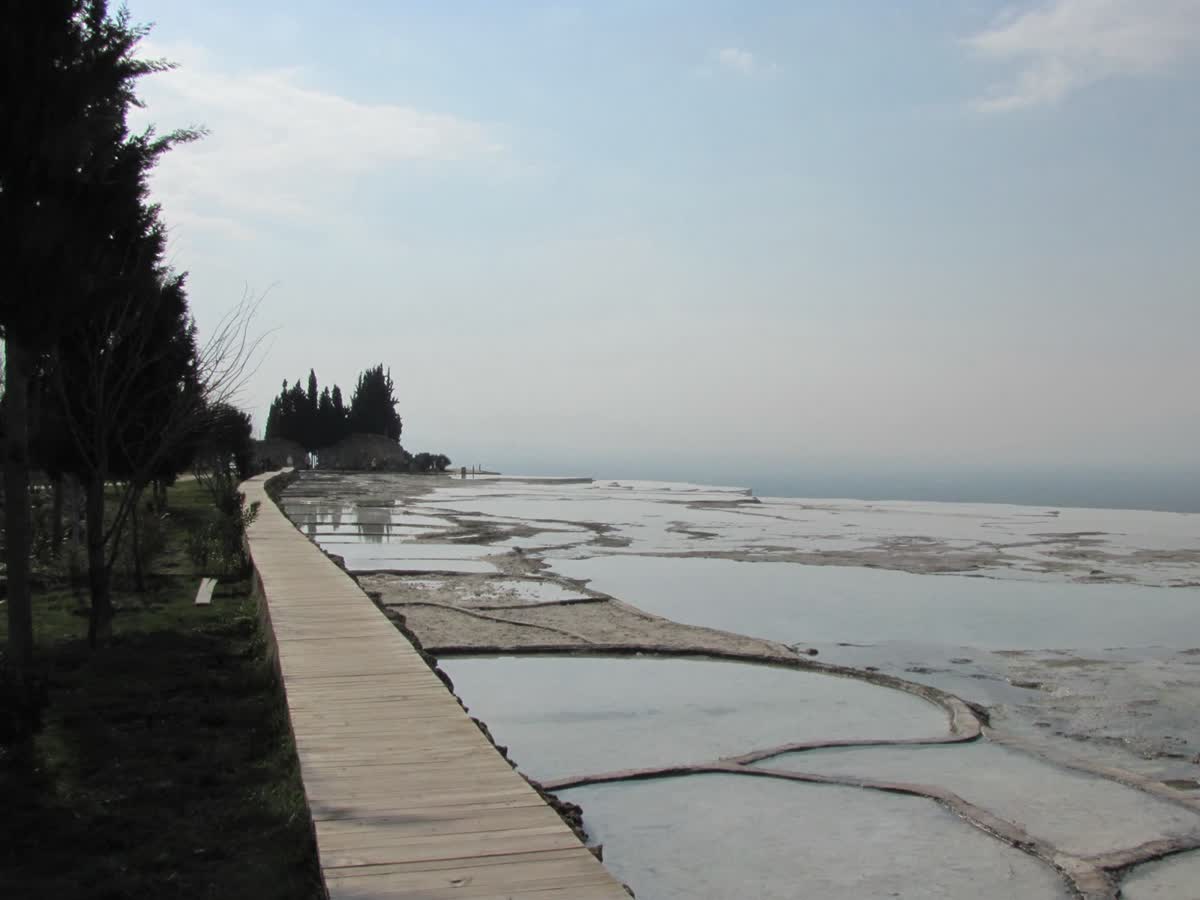
Photo: Slyronit / Wikimedia Commons (CC BY-SA 4.0)
✓ Facts checked on 2026-10-14 against the official operator site.
Pamukkale Travertines is a public thermal bathing spot, affordable, local, and refreshingly unpretentious in Asia, Turkey. This guide covers the bathing, the journey, the timing, the cost, and the practical details that separate a good soak from a great one.
Pamukkale Travertines at a glance
| Location | Asia, Turkey |
|---|---|
| Spring type | Public thermal pool |
| Water temperature | 35–36°C in pools |
| Mineral profile | Calcium carbonate |
| Admission | EUR 30 foreign visitor (incl. Hierapolis) |
| Opening hours | Daily 08:00-18:00; ticket office closes 17:00 |
| Seasonal closures | - |
| Good for families | Yes |
| Step-free access | - |
| Official website | Official site |
| GPS | 37.92, 29.119 |
What makes Pamukkale Travertines special
White travertine terraces built up over millennia by calcium-rich thermal water, with the ancient Greco-Roman city of Hierapolis spread across the plateau above. You walk the terraces barefoot, shoes are not allowed on the travertine, and can paddle and swim in the warm pools. Entry includes the Hierapolis ruins and museum. Arrive at opening time to walk the terraces before the tour buses, and stay for sunset when the white stone glows. Good to know: the famous Cleopatra's Pool (swimming among fallen columns) costs extra.
Public pools give you something resorts cannot: the everyday bathing culture of the place itself. You will probably share the water with locals on their weekly soak. That tells you more about Turkey than any brochure, usually at the lowest price around.
Geology and background
Hot springs happen where groundwater sinks deep enough to be heated by the earth, then rises back through cracks and porous rock. The water often spends decades underground, collecting dissolved minerals on the way up.
Asia's bathing culture is the world's most ritualised. Japan's onsen tradition, wash first, soak in silence, respect the water, has been refined over a thousand years, and it anchors the region. Around it: Korea's social jjimjilbang bathhouses, Taiwan's Beitou valley, Turkey's Ottoman hamams, and a fast-growing scene across Southeast Asia. Local legends about a spring's discovery turn up everywhere thermal water does. Enjoy them as stories, not history.
Water temperature and minerals
Developed bathing sites keep their pools at set temperatures and usually list them on site. If temperature matters for your visit, ask the operator directly.
Water colour and smell say little about what is actually dissolved in it. Milky, clear, or faintly sulphurous water can all hide very different chemistry, so take any mineral claims you read online with a pinch of salt. A soak can feel wonderful, but it does not treat any condition. If you are pregnant or managing a heart condition or anything heat-sensitive, check with a professional first.
Pools and the bathing experience
Public thermal pools run from simple municipal bathhouses to lively open-air complexes. The water is geothermal in origin, usually blended to a comfortable bathing temperature. Expect locals doing their regular soak alongside visitors. That is exactly the charm.
Pamukkale Travertines is listed as family-friendly. Expect shallower or cooler areas where children can bathe, though the usual rules still apply and hot source pools are never for children.
Swimwear customs differ by country and by site. Bring swimwear and follow the posted rules and what local bathers do.
Facilities and amenities
The basics done well: changing areas, showers, lockers. Larger complexes often have a cafe or snack bar. Smaller ones may have just the pools, so eat beforehand if unsure.
- Food and drink: not guaranteed. Carry snacks and water.
- Accessibility: if mobility is a concern, contact the operator ahead to check.
- Parking and transport: see the getting-there section below.
Prices, tickets, and opening hours
| Admission | EUR 30 foreign visitor (incl. Hierapolis) |
|---|---|
| Opening hours | Daily 08:00-18:00; ticket office closes 17:00 |
Checked on 2026-10-14. Prices and hours change, so confirm on the official site before you go.
How to get to Pamukkale Travertines
Pamukkale is 20 km from Denizli, which has bus and rail links across Turkey and a small airport with Istanbul flights. Most visitors day-trip from Denizli or stay overnight in Pamukkale village. You enter at the top (near Hierapolis) or bottom gate; the walk between them is the experience.
Our Turkey hot springs guide covers country-level transport planning.
Get directions to Pamukkale Travertines →
Best time to visit
April–June and September–October: warm terraces, fewer crowds. Pamukkale at sunrise beats the tour buses. Winter is fine for the indoor hamams. November for autumn foliage soaks and January–February for snow-view rotenburo in Japan, the two classic seasons. Avoid Golden Week (early May) and New Year crowds. Turkey's coast is best in spring and autumn; Southeast Asia's springs are year-round, though the monsoon months (roughly June–October) can complicate rural travel.
Crowds and timing
Public pools follow local rhythms: busy after work and on weekends, calm on weekday mornings. School holidays bring families and fuller water. Arrive at opening time for the quietest soak. These are typical patterns, not live crowd counts.
How long to spend there
Allow 2 to 3 hours at Pamukkale Travertines. Take that as a suggestion. It leaves time to settle in, try the different pools, and cool off between soaks without rushing. The spring also works well as a half-day anchor for sightseeing around Asia.
Nearby hot springs worth combining
One spring rarely fills a trip on its own. These thermal spots in Turkey pair well with Pamukkale Travertines:
- Pamukcu Thermal Springs, Turkey
- Cermik Thermal Springs, Turkey
- Gazligol Thermal Springs, Turkey
- Karahayit Red Springs, Turkey
- Gonen Thermal Springs, Turkey
- Gulbahce Roman Baths, Turkey
Browse the full Turkey collection, or string several stops together with our trip planner.
Where to stay near Pamukkale Travertines
Public pools sit in or near towns, so the usual hotels, guesthouses, and apartments in Asia apply. Staying close lets you visit at off-peak hours, when the water is at its best. We name no specific properties or prices here. Both move too fast to stay accurate. Book free cancellation when your dates are uncertain.
Safety, rules, and responsible bathing
You must walk the terraces barefoot - shoes damage the travertine. The stone can be slippery and the midday sun fierce: bring water, a hat and sunscreen. The thermal water is warm, not hot (around 35-36C in the pools). Stay on marked paths; the white crust is fragile.
- Heat: keep soaks to 10 to 15 minutes, cool off between rounds, and get out if you feel dizzy or nauseous. Stand up slowly.
- Water: drink plenty before, during, and after. Go easy on alcohol around hot water.
- Children: watch them constantly. Hot water scalds faster than most parents expect.
- Etiquette: shower where asked, follow the posted rules, keep the noise down, and take everything home with you. No soap in natural water.
This is general guidance only. If you are pregnant or managing a health condition, talk to a professional before bathing in hot springs.
What to bring
- Swimwear
- A quick-dry towel, two if hire is uncertain
- Drinking water, a litre or more per person
- Water shoes or sturdy sandals
- A waterproof pouch for valuables if lockers are not guaranteed
- Sun protection and warm layers
- Cash. Rural sites and parking often skip cards.
Practical visitor tips
- Go on a weekday morning for the quietest water. Weekends fill fast.
- Bring your own towel and a waterproof bag. Rentals are not guaranteed.
- Shower before entering. It is the rule and the custom at most public baths.
- Recheck access and opening status close to your visit date. Smaller springs change without notice.
- Unsure what kind of spring suits you? Take the soak quiz. It matches your preferences to springs across Turkey and beyond.
Frequently asked questions
Can you swim at Pamukkale?
Yes - you can paddle and wade in the shallow travertine pools along the designated path. For a real swim, Cleopatra Pool (extra ticket) lets you float among fallen ancient columns in warm mineral water.
How much does Pamukkale cost?
Entry includes the terraces, the Hierapolis ruins and the museum - expect around 30 euros, with prices revised periodically. Cleopatra Pool costs extra. Check current prices before you go.
What is the best time to visit Pamukkale?
Arrive at opening time to walk the terraces before the tour buses, or come late for sunset when the white stone glows. Spring and autumn have the kindest weather; summer midday is brutally hot and crowded.
Why do you have to be barefoot at Pamukkale?
Shoes damage the soft travertine that the calcium-rich water is still depositing. Barefoot walking is mandatory on the terraces - it is also genuinely pleasant.
How far is Pamukkale from Istanbul?
About 650 km - too far for a day trip. Fly to Denizli (around 1 hour) or take the overnight bus from Istanbul main terminal. Most travellers combine Pamukkale with Ephesus.
How much does it cost, and when is it open?
Admission: EUR 30 foreign visitor (incl. Hierapolis). Hours: Daily 08:00-18:00; ticket office closes 17:00. Checked 2026-10-14. Confirm before you go.
The bottom line
Pamukkale Travertines suits travellers looking for a public thermal bathing spot, affordable, local, and refreshingly unpretentious in Turkey. History lovers, photographers and families - the combination of travertine pools and the vast Hierapolis ruins above is unmatched. It is an easy walk, not a hike, and manageable for most fitness levels, though the terraces are barefoot-only and can be slippery. Before you go, check current access and opening status. Prices, hours, and conditions at thermal springs change often, and the operator's own channels are the reliable source. Pair it with other springs in Turkey or explore more of Asia to turn one soak into a proper thermal itinerary.
Keep exploring
- More hot springs in TurkeyBrowse every thermal spot we cover in the country.
- Asia hot springs guideHow the region's thermal areas fit together, and when to go.
- More public thermal poolsOther springs with the same kind of bathing experience.
- Trip plannerString several springs into one route.
- Soak quizFind the springs that match how you like to bathe.
Soaker reviews
No reviews yet. Be the first to report back from the water.
Discover Turkey
Thermal waters, rich history and charming streets make Turkey a unique destination for wellness and culture.
Explore the area →
Leave a soak report